
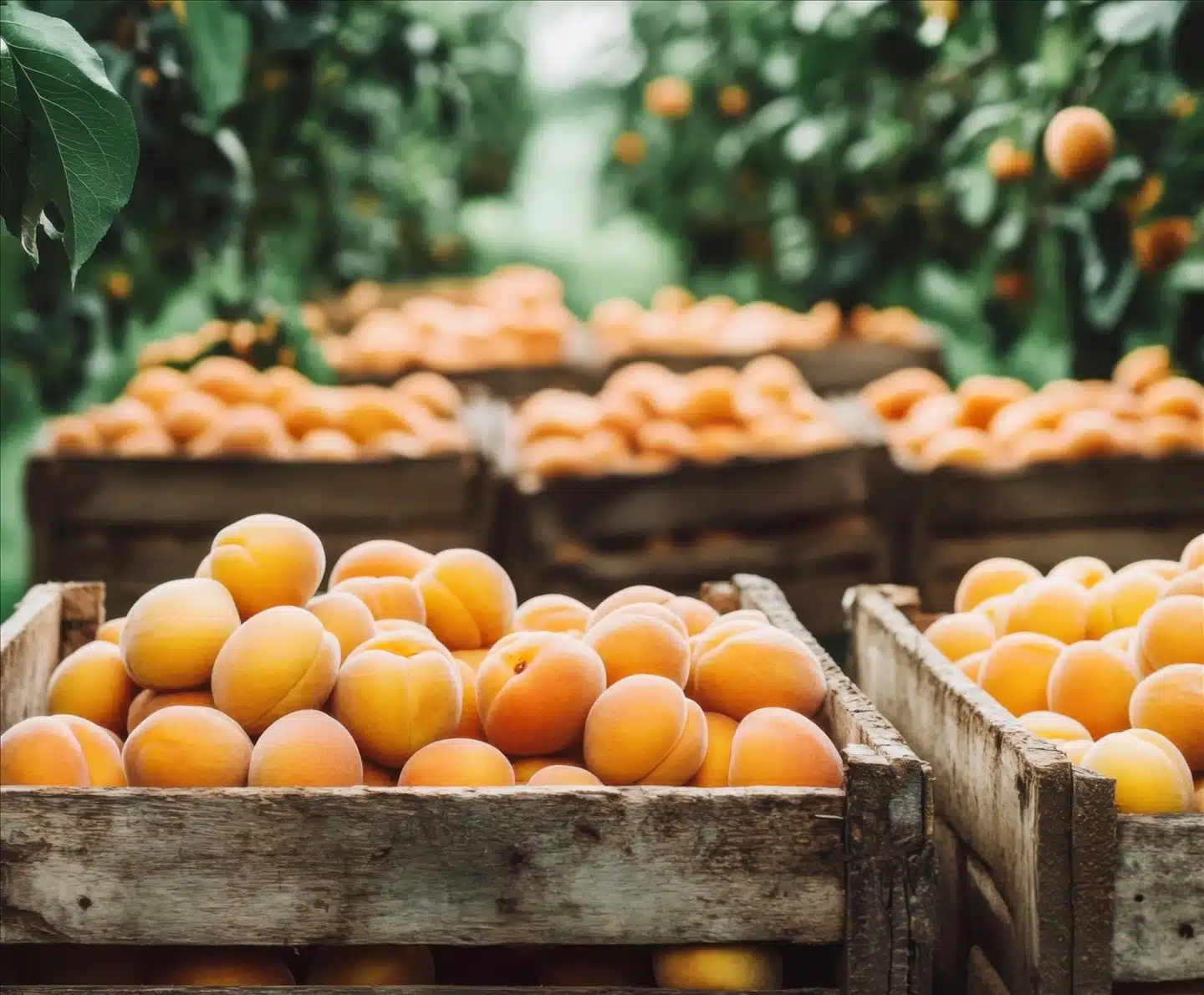
Summerfruit Australia Limited (SAL) is the recognised national peak industry body for Australia’s summerfruit growers. Since 1998 we have worked on behalf of growers of apricots, nectarines, peaches and plums across every production state, acting as the industry’s voice on a national and international level.
About Summerfruit Australia
Who we are
Summerfruit Australia is recognised by the Australian Government as the prescribed Peak Industry Body (PIB) for summerfruit growers. Our constitution recognises all levy payers as members, and we welcome wholesalers, retailers, farm input suppliers and other industry stakeholders to take part through supporter membership.
We work closely with researchers, government and supply chain partners to maximise profitability, innovation, opportunities and trade for our members.
Our guiding principle is simple:
What’s good for the industry is good for growers.
We support you to grow, sell and sustain
How Summerfruit Australia works
What we do
SAL delivers government funded programs, advocacy and industry services on behalf of Australian summerfruit growers. Our work covers four core areas:
Advocacy and Representation
We represent summerfruit growers to government, regulators and industry bodies on the issues that matter most, including labour, biosecurity, water, market access and research and development.
Research, Development and Extension
We invest the summerfruit levy into R&D programs delivered through the Hort Innovation Summerfruit Fund, translating research into practical outcomes for growers at the farm gate.
Market Access and Trade
Through the Summerfruit Export Development Advisory (SEDA), SAL drives the industry’s export strategy, working on protocols, market access negotiations and trade development.
SEDA
Summerfruit Export Development Advisory
SEDA is SAL’s dedicated export advisory committee. It guides the industry’s export strategy, coordinates market access priorities and oversees investment in trade development programs for Australian summerfruit.
SEDA works in partnership with the Hort Innovation Summerfruit Fund, the Department of Agriculture, Fisheries and Forestry (DAFF) and international trade partners to open and maintain access to high-value export markets across Asia, the Middle East and beyond.
Who SEDA serves
- Growers looking to enter or expand export supply
- Exporters working across compliance, cold chain and market protocols
- Government and industry partners shaping export strategy
Strategic priorities
Our strategic priorities are set in consultation with growers, industry partners and the
Summerfruit Fund Strategic Investment Plan.
Current focus areas include:
Read the Strategic Plan →
01
Biosecurity preparedness and pest management

02
Market access and export growth
03
Productivity and profitability at the farm gate

04
Workforce and labour
05
Consumer demand and marketing

06
Industry sustainability and long-term viability
Our team
Meet the Summerfruit Australia Team
Our small, dedicated team delivers SAL’s programs, advocacy and industry services on behalf of Australia’s summerfruit growers. We’re based across Victoria and work nationally.
Governance
SAL is governed by a board of directors elected by its members, for its members.
Summerfruit Australia is governed by a board of directors elected by members. The board is accountable to levy payers and operates under SAL’s constitution, setting the strategic direction for Australia’s summerfruit industry.
Governance
Governance Structure
The SAL board is elected by members at the Annual General Meeting. Directors serve fixed terms and represent the diversity of Australia’s summerfruit growing regions.
Constitution
SAL operates under a constitution that recognises all levy payers as members. Supporter membership is also open to wholesalers, retailers, farm input suppliers and other industry stakeholders.
Committees
The board is supported by specialist committees including the Summerfruit Export Development Advisory (SEDA), the Summerfruit Industry Advisory Committee (IAC) and Finance & Audit.
AGM
Held annually. Members vote on board elections, receive the annual report and provide input on strategic direction.
Our Constitution
The SAL Constitution was adopted in September 2003 and is the single most authoritative instrument governing SAL’s operations with the exception of the overarching legislative force of the NSW Corporation’s Act 2001 the provisions of which provide a broader legal framework especially in regard to the Board’s corporate governance responsibilities.
Our Objectives
Under the Constitution, the objectives of SAL are as follows:
the advancement of the summerfruit industry;
to increase Australian and international consumption of Australian summerfruit at a profitable return;
to be the channel of communication in matters relating to issues affecting summerfruit of a national and international nature;
to coordinate the efforts of members and the community in the best interests of the summerfruit industry;
to develop a strong, professional summerfruit industry operating with a common purpose and in cooperation;
to coordinate with others the collection, management and expenditure of the industry levy for the benefit of the summerfruit industry; and
to support the efforts of other groups and individual that are of benefit to the summerfruit industry.
General Meetings
General meetings shall be convened (i) annually; (ii) at other times at the discretion of the Board; and (iii) when requested in writing by 5% of eligible voters. A quorum is constituted by two members present representing not less than 5% of the total membership.
Voting at general meetings shall be by a show of hands unless a poll is demanded and carried. Only financial members may vote at general meetings. The use of proxies is provided for in the Constitution.
All members have an equal vote at general meetings except in regard to resolutions to modify the Constitution. In this case, A Members have two votes and B Members only one.
Notices
Notices of meetings may be served on members personally, or by post, fax or e-mail. Delivery of a notice is deemed to have been effected if despatched and properly addressed. There is no requirement to effect a delivery if a member has not provided a proper address.
Board of Directors
The Board comprises seven Directors with at least one elected from each of the States – NSW, Victoria, QLD, SA, WA and Tasmania.
In the event there is no representative from a particular State to fill a vacancy, that vacancy may be filled by a candidate from another State. The Board may at any time appoint any representative as a Director to fill a casual vacancy so long as this occurs outside a period of three months before an annual election. Persons elected to fill a causal vacancy must stand for election at the next annual meeting.
Only A members may nominate and second, and vote for Directors.
Directors may be removed at any time by resolution passed in general meeting.
The Constitution prohibits the payment of fees to Directors but permits the reimbursement of out-of-pocket expenses incurred in the performance of their duties.
The Board is responsible for managing SAL’s business and for exercising any powers of authority determined by a general meeting of members. In the exercise of its authority, the Board is subject to the corporate governance requirements of the Corporations Act, the provisions of which impose considerable penalties for non-compliance.
The Board shall meet at least twice annually, once at least in each six consecutive months. Meetings may be conducted electronically. Seven Directors constitute a quorum.
The Chair and Deputy Chair shall be elected by the Board.
Board Committees
The Constitution provides for the creation of Board committees to which the Board may delegate certain of its powers. Such committees must record minutes and proceedings in all respects as required of the Board (see later, Company Records).
Other Offices
The Board may create any position in the Company and determine its powers and responsibilities and appoint any person, whether or not a Director, to that position. The Board may at any time terminate the appointment or abolish the position.
Company Records
The Board shall cause proper accounts and other records to be kept and audited and provide to members copies of a financial report, the Director’s report for the year, and the auditor’s report to members 21 days before the next annual general meeting or four months after the end of the financial year.
The Constitution further provides for the Board to send half yearly reports on the state of affairs of the Company to members.
The Board must also cause minutes to be prepared that show all appointments of officers, the names of Directors present at meetings of the Board and Board committees, all orders made by the Board or Board committees, and all resolutions and proceedings of meetings of the Board and Board committees.
The Board may approve a member to inspect the records of the Company, but members (other than Directors) do not have this as a right other than where required by law.
Our Sponsors
Industry Partners that drive us forward

Business description

Business description

Business description
Work with us
We’re a small team making a big contribution to the Australian summerfruit industry.
We don’t have any open roles at the moment, but we are always interested to meet interested parties. So fill out the form, and we will be in touch.